
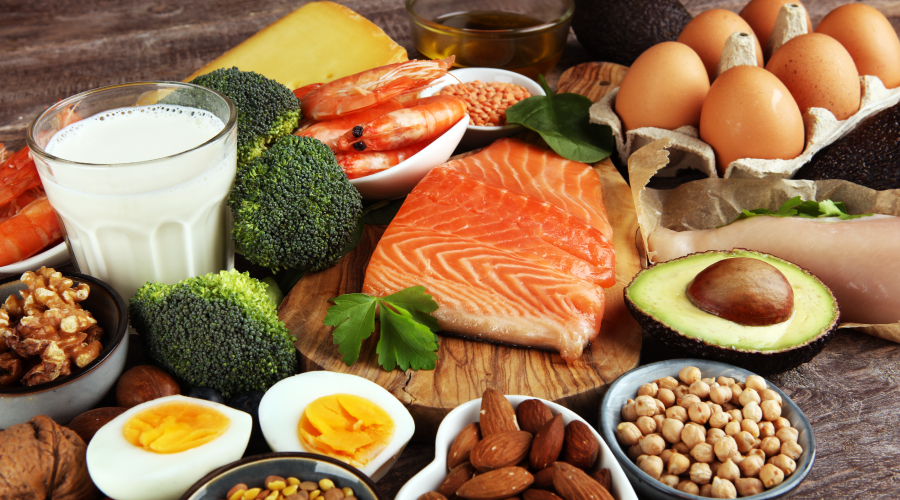

If you wish to gain weight, you need not eat anything that’s high in calories. You just need to choose foods that will give you a surplus of proteins, calories, healthy fats, carbs, vitamins and minerals. In this article, we have curated a list of 10 nutrient-dense food options. We have divided them by their calorie volume, macro profile, and how easy they are to add in our Indian kitchens.
The best high-calorie foods for weight gain are nuts and nut butters. Whole dairy, fatty fish, complex grains, eggs, bananas, dried fruits, potatoes, avocados, and seeds play a huge role as well. If you wish for a steady weight gain, you may aim for a daily surplus of about 300–500 calories above baseline. This will help you increase your body weight gradually without depending on junk food.
Healthy vs Unhealthy Caloric Surplus
A caloric surplus is all about eating more calories than your body can burn. But the quality of those calories matters, too.
A clean surplus uses whole foods. These include dairy, nuts, grains, fruits, eggs, fish, pulses, and healthy oils. These food options support energy, muscle repair, digestion, and micronutrient intake.
Dirty bulking is a whole different thing. It usually depends on fried snacks, sugary drinks, bakery foods, and ultra-processed meals. These foods may quickly raise your calorie intake, but they can also increase unhealthy fat gain and lifestyle diseases.
The WHO says healthy diets should usually focus on the adequacy of portions, balance, moderation, and diversity. It also mentions limiting free sugars, unhealthy fats, and highly processed foods.
Micronutrient Density vs Empty Calories
Healthy high-calorie foods give more than just energy. They provide magnesium, zinc, calcium, potassium, iron, B vitamins, and essential fatty acids.
These nutrients help your body use food better. They also support your muscle function, bone health, immunity, and energy metabolism.
Empty calories do just the opposite. They add energy but give very little nutrition to your body. That is why a banana milkshake is better than a sugary cola. Even though both provide calories, only one adds useful nutrients.
10 Best High-Calorie Foods for Weight Gain
1. Nuts and Nut Butters
Verdict: Nuts are compact, calorie-rich foods that add energy without increasing meal volume too much.
Calorie Count: Around 160–190 kcal per 30 g
Primary Macronutrient: Healthy fats
Best Indian Addition: Peanut butter on whole wheat roti or toast
Nuts are rich in fats, protein, fibre, and minerals. Almonds, peanuts, cashews, and walnuts are easily available and simple to add to your regular meals. You can toss them into your breakfast bowls, smoothies, healthy laddoos, or trail mixes.
Nut butters are incredibly useful if you have a low appetite. One spoon can add a few calories quickly. However, portion control is vital because calories add up fast.
Who it’s for: Best for busy people who struggle to eat large meals.
2. Full-Fat Dairy
Verdict: Full-fat dairy gives calories, protein, calcium, and healthy meal flexibility.
Calorie Count: Around 260 kcal per 100 g paneer
Primary Macronutrient: Protein and fat
Best Indian Addition: Grilled paneer cubes or whole milk smoothies
Paneer, whole milk, curd, and cheese help increase your calorie intake naturally while offering complete protein to support muscle repair.
Paneer works seamlessly in Indian kitchens. You can add it to rolls, sabzi, bhurji, salads, and parathas. Whole milk works perfectly in your regular smoothies with bananas, oats, and dates. If you are lactose intolerant, choose curd, lactose-free milk, or other suitable alternatives.
Who it’s for: Best for vegetarians who want protein and calories together.
3. Avocados
Verdict: Avocados offer plant-based calories with heart-friendly monounsaturated fats.
Calorie Count: Around 240 kcal per medium avocado
Primary Macronutrient: Monounsaturated fat
Best Indian Addition: Avocado chutney or spread on multigrain paratha
Avocado is calorie-dense but still feels light on your stomach. It contains fibre, potassium, and healthy fats.
You can mash it with lemon, salt, pepper, coriander, and mint, or use it as a spread for your toast, roti wraps, or paratha rolls. The only limitations are regional availability and cost, so it may not be an everyday option for everyone.
Who it’s for: Best for people looking for plant-based fat calories.
4. Whole Eggs
Verdict: Eggs are affordable, protein-rich, and easy to include in daily meals.
Calorie Count: Around 75 kcal per large boiled egg
Primary Macronutrient: High-quality protein and fat
Best Indian Addition: Egg bhurji cooked with ghee or olive oil
Whole eggs provide a perfect mix of protein, fat, and vitamins. The protein comes from the whites, while the fats and fat-soluble vitamins come from the yolks.
Eggs can be cooked in endless ways: bhurji, omelettes, sandwiches, rice bowls, or curries. You can even fortify them with vegetables for additional micronutrients. If you have specific concerns about cholesterol levels, consult a doctor.
Who it’s for: Best for non-vegetarians who need cost-effective, muscle-supporting food.
5. Fatty Fish
Verdict: Fatty fish gives protein, calories, and omega-3 fatty acids in one meal.
Calorie Count: Around 200 kcal per 100 g salmon
Primary Macronutrient: Protein and omega-3 fats
Best Indian Addition: Tawa-grilled fish with Indian spices
Fatty fish are fantastic for seafood lovers. They serve as an excellent source of calories without relying on refined carbohydrates.
According to the NIH Office of Dietary Supplements, cold-water fish like salmon, mackerel, tuna, herring, and sardines are rich in long-chain Omega-3s. Fish are best enjoyed grilled, baked, steamed, or lightly pan-cooked, but try to avoid deep-frying them regularly.
Who it’s for: Best for active people who want protein and recovery-supporting fats.
6. Bananas
Verdict: Bananas are easy-to-digest calorie boosters for snacks and shakes.
Calorie Count: Around 105 kcal per large banana
Primary Macronutrient: Carbohydrates and potassium
Best Indian Addition: Banana in a milkshake or oatmeal
Bananas are one of the easiest options to add to one’s diet for weight gain and make an excellent pre- or post-workout snack.
Because they aren’t very high in protein on their own, you can easily pair them with milk, curd, nuts, or whey protein powder to create a balanced meal.
Who it’s for: Best for hardgainers who need quick carbs.
7. Complex Grains
Verdict: Complex grains support steady energy and better meal volume.
Calorie Count: Around 150 kcal per cup cooked oats
Primary Macronutrient: Complex carbohydrates
Best Indian Addition: Oats upma or quinoa pulao
Complex grains serve as an excellent main component for weight-gain meals, often providing additional protein.
The WHO recommends getting carbohydrates primarily from whole grains, making them vastly superior to refined sugary foods. Oats are incredibly versatile and work well as porridge, cheela, upma, or in smoothies. Brown rice and millets pair beautifully with dal, curd, paneer, fish, or eggs.
Who it’s for: Best for people who need stable energy through the day.
8. Dried Fruits
Verdict: Dried fruits give concentrated calories in small portions.
Calorie Count: Around 280 kcal per 100 g dates
Primary Macronutrient: Natural carbohydrates
Best Indian Addition: Chopped dates in kheer or pre-workout snacks
You can naturally increase your calories using dates, raisins, figs, apricots, and prunes. Because the water is removed, these dried fruits are much denser and sweeter than their fresh counterparts.
Toss dried fruits into smoothies, porridge, and trail mixes, or mix them into kheer and laddoos. They are fantastic for bumping up your daily intake, but enjoy them in moderation due to their high natural sugar content.
Who it’s for: Best for people who want a natural sweet calorie source.
9. Sweet Potatoes and Potatoes
Verdict: Potatoes and sweet potatoes give clean starchy calories for training fuel.
Calorie Count: Around 110 kcal per medium baked sweet potato
Primary Macronutrient: Complex starch
Best Indian Addition: Roasted sweet potato chaat with lemon juice
Sweet potatoes and potatoes are easy to cook, low-cost, highly filling, and packed with potassium.
Boiled, baked, roasted, or lightly sautéed potatoes are excellent choices. Pair them with curd, paneer, eggs, fish, and dal for a good protein balance. Avoid relying on deep-fried potatoes, as they shift your meal’s focus to unhealthy fats.
Who it’s for: Best for athletes and active people who need training fuel.
10. Healthy Seeds
Verdict: Seeds are small but dense sources of calories, minerals, and plant fats.
Calorie Count: Around 160 kcal per 30 g of pumpkin seeds
Primary Macronutrient: Healthy fats, magnesium, and zinc
Best Indian Addition: Roasted seed mix as a mid-day snack
Seeds—such as pumpkin, chia, sunflower, flax, and sesame—effortlessly increase your calorie intake while supplying vital minerals.
You can mix roasted seeds into curd, smoothies, poha, oats, salads, and dal. They also make great portable snacks. Keep in mind that chia and flax seeds absorb water, so introduce them slowly and stay hydrated.
Who it’s for: Best for vegetarians and vegans who want calorie-dense snacks.
Quick Comparison and Macronutrient Matrix
Go through this table for a simple planning tool. Calorie values here are approximate and may vary by brand, cooking method, and serving size. You can use standard food composition databases, such as USDA FoodData Central, for exact values.
| Food Item | Serving Size | Calorie Density | Dominant Macro Profile |
| Nuts and nut butters | 30 g nuts or 2 tbsp butter | 160–190 kcal | Healthy fats |
| Paneer and full-fat dairy | 100 g paneer | Around 260 kcal | Protein + fat |
| Avocado | 1 medium fruit | Around 240 kcal | Monounsaturated fats |
| Whole eggs | 1 large egg | Around 75 kcal | Protein + fat |
| Fatty fish | 100 g cooked fish | Around 180–220 kcal | Protein + omega-3 fats |
| Banana | 1 large banana | Around 105 kcal | Carbohydrates |
| Oats and grains | 1 cup cooked oats | Around 150 kcal | Complex carbs |
| Dried fruits | 100 g dates | Around 280 kcal | Natural carbs |
| Sweet potato | 1 medium baked piece | Around 110 kcal | Starch |
| Pumpkin seeds | 30 g | Around 160 kcal | Fats + minerals |
Sneaking in Liquid Calories Effectively
Liquid calories can help you feel full easily. A smoothie is also easier to drink than a large solid meal.
Here is an option for a simple high-calorie shake which you can include in your diet:
- 250 ml whole milk
- 1 ripe banana
- 2 tablespoons peanut butter
- ½ cup oats
- 2 dates
This can cross 600 calories depending on portions. Also, it gives carbs, fats, protein, potassium, fibre, and minerals at one go!
You may drink it between meals. But avoid taking it before meals. This avoids reducing your main meal appetite.
You can also use curd, Greek yoghurt, mango, chikoo, nuts, seeds, or cocoa powder in your smoothie. However, keep added sugar low. Or you may use jaggery.
Cooking Enhancements with Healthy Ghee and Oils
Adding calories to a meal can be accomplished without increasing the portion size of a meal by making small changes to the recipe. Oil, ghee, or any other healthy fat, such as sesame oil can be added to a stewed lentil meal (dal), a one-pot meal (khichdi), cooked vegetables (sabzi), or rice.
One tablespoon of healthy fat can add around 120 calories, which is helpful for hardgainers.
Quality of fat is crucial. The fats that are recommended by the WHO include unsaturated fats that are obtained from fish, avocados, nuts, and plant oils. Ghee contains saturated fat, and therefore moderation is advised.
Build Meals Around Protein
Increased calorie consumption contributes to weight gain. Protein, however, will determine how much of that gain is muscle.
According to the International Society of Sports Nutrition, 1.4–2.0 g of protein per kg of body weight is enough for most of the exercising individuals to build and maintain muscle.
This also means that not everyone needs a very high protein diet, but active individuals need to combine calories with a sufficient amount of protein and engage in strength training.
A good example of an Indian food combination includes:
- Paneer paratha with curd
- Egg bhurji with roti
- Dal khichdi with ghee
- Fish curry with rice
- Peanut butter banana smoothie
- Oats with milk, nuts, and dates
Sample High Calorie Indian Meal Plan
This is a simple vegetarian-friendly sample for you. You may, however, adjust portions as per your calorie needs.
|
Time |
Meal | What to Eat |
|
Morning |
Breakfast |
Oats cooked in whole milk with banana, dates, and nuts |
|
Mid-morning |
Snack |
Peanut butter toast or roasted chana with dry fruits |
|
Lunch |
Main meal |
Rice or roti with dal, paneer sabzi, curd, and salad |
|
Evening |
Shake |
Whole milk smoothie with banana, oats, and peanut butter |
|
Dinner |
Main meal |
Khichdi with ghee, vegetables, and curd |
| Bedtime | Light snack |
Warm milk or curd with seeds |
If you are a non-vegetarian, you can add eggs, chicken, or fish to lunch or dinner. And for a vegan diet, use soy milk, tofu, peanut butter, seeds, nuts, and legumes.
A Few Safety Tips Before Increasing Your Calories
High-calorie foods can help, but they need to suit your body.
You can speak to a doctor or dietitian if you experience certain concerns. These could be sudden weight loss, appetite loss, digestive issues, diabetes, kidney disease, liver disease, thyroid concerns, or a history of eating disorders.
Also, you need to track progress slowly. If you gain weight too fast, you may add more fat than muscle.
A good approach should be simple:
- Add 300-500 calories daily.
- Eat protein with each main meal.
- Strength train 3-4 days a week.
- Sleep well.
- Track body weight weekly.
- Adjust portions after 2-3 weeks.
Conclusion
Preparing a calorie-dense meal for yourself isn’t tough if you know where to start. You can keep this guide handy for a quick reference whenever you feel overwhelmed. Start small and slowly you will be able to build an everyday meal plan for yourself that will really work.
Frequently Asked Questions
What foods are highest in calories for weight gain?
The highest-calorie foods for weight gain include nuts, peanut butter, full-fat dairy, paneer, avocado, fatty fish, dried fruits, seeds, whole eggs, and healthy oils. These foods provide more calories per smaller portion. They are useful for people with low appetite or high energy needs.
How can I increase my daily calorie intake fast?
Add calorie-dense foods to meals. Use peanut butter in smoothies, ghee in dal, nuts in oats, paneer in rolls, and dates in milkshakes. Adults trying to gain weight can add about 300–500 extra calories daily. Keep the surplus steady and choose nutrient-rich foods.
Are high-calorie foods healthy for you?
High-calorie foods can be healthy when they come from whole foods. Nuts, dairy, eggs, fish, grains, fruits, and seeds provide calories with nutrients. Fried snacks, sugary drinks, and processed foods also give calories, but they add fewer useful nutrients. Food quality matters.
Which Indian foods are highest in healthy calories?
Healthy high-calorie Indian foods include paneer, whole milk, curd, ghee in moderation, peanut chikki, til ladoo, dal khichdi with ghee, parathas, dry fruit laddoos, banana milkshakes, and rice with dal. Pair them with protein for better weight gain.
Can I build muscle using only high-calorie foods?
High-calorie foods help create a surplus, but muscle gain also needs protein and resistance training. Eating more calories without strength training may lead to increased fat gain. For better results, combine calorie-rich meals with protein foods like paneer, eggs, fish, dal, curd, tofu, or whey protein
