
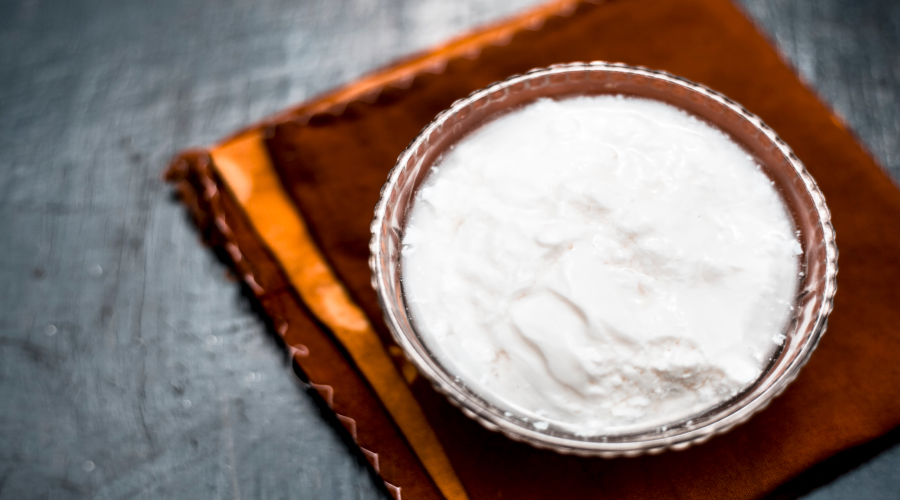

Curd, often known as dahi, is a fermented milk product that is rich in lactic acid, milk fats, proteins, minerals, and good, beneficial bacteria. It is understandable that curd might be an important part of traditional skincare, given its makeup. However, how much of this can actually be supported by science? This article aims to answer a few curd-related questions on skincare, including the possible explanations for why curd benefits the skin, how topical application of curd might work, the best face packs, why some people believe that curd consumption might cause acne, and the importance of knowing the precautions when putting curd on your face.
Curd can benefit the skin mainly due to its natural content of lactic acid, milk fats, and bacterial components from fermentation. Since lactic acid is an alpha hydroxy acid (AHA), it has the ability to bind with dead cells on the surface of the skin and loosen them. Curd fats, along with other skin softeners, may help hydrate the skin, especially dry skin. Although fermented bacterial components may benefit the skin barrier, plain curd isn’t standardized in skincare, meaning the concentration of lactic acid and the pH can vary widely from batch to batch.
The Key Bio-Active Nutrients in Curd That Support Skin Health
The benefits of applying curd to the face are often linked to a combination of acids, fats, minerals, proteins, and fermentation products. However, it is important to distinguish between what scientists know about these individual components and what has been directly proven for homemade curd.
Lactic Acid: Mild Alpha-Hydroxy Exfoliation
Curd contains lactic acid, a naturally occurring alpha-hydroxy acid (AHA). AHAs are known for their exfoliating properties. They help loosen the bonds that hold dead skin cells together on the skin’s surface. This encourages older, dull-looking cells to shed and supports the skin’s natural renewal process.
Unlike physical exfoliants that use scrubbing particles, lactic acid works through chemical exfoliation. Its relatively gentle action may help improve rough or uneven skin texture and make the skin feel smoother.
However, the amount of lactic acid in curd is not standardised and can vary depending on how it is prepared and fermented. So, applying curd to the skin is not the same as using a formulated lactic acid skincare product with a defined concentration and pH.
Research shows lactic acid is safe to use and helps improve skin appearance as well as firmness and smoothness. One study showed that 12% lactic acid improved the appearance of wrinkles, skin thickness, and skin firmness after 3 months of twice-daily use.
Another 3-month study with 74 women aged 40 to 70 treated photodamaged skin with 8% glycolic acid, 8% lactic acid, or a vehicle cream.
The research shows that lactic acid in curd may be used for skin exfoliation. However, having a bowl of curd is unlikely to provide the same benefits as a clinical lactic acid cream. It is not possible to determine the amount of free lactic acid in homemade curd or dahi to see whether it is anywhere near therapeutic levels.
Lipids and Fatty Acids: Supporting Softness and Moisture
Curd made from whole milk contains natural fats that can help make dry skin feel softer and smoother. When applied to the skin, these fats may form a light layer on the surface and help reduce the feeling of dryness or tightness.
The skin also has its own natural fats, including ceramides, cholesterol, and fatty acids. Together, they help maintain the skin’s moisture barrier and prevent too much water from escaping.
Curd cannot replace these naturally occurring skin lipids or a properly formulated moisturiser. However, as a short-contact home remedy, it may provide temporary softness and help dry skin feel more comfortable.
Zinc and Trace Minerals: Important for Skin, but Keep the Claim in Context
Dairy products contain some zinc, and it is important for skin health. According to the NIH, zinc contributes to protein and DNA synthesis, immune function, and skin healing. Adult women require 8 mg of zinc daily, while adult men require 11 mg.
This does not imply that zinc present in curd has a therapeutic effect as a topical zinc preparation when dispersed on the face. Most topical zinc studies focus on specific formulations, such as zinc oxide or other zinc-based dermatological preparations.
Thus, zinc may play a role, but it should not be the reason for using curd as an acne or wound-healing remedy.
Probiotic Cultures and the Gut-Skin Axis
Curd is a product of bacterial fermentation using lactic acid-producing microorganisms. This has sparked interest in the possible role of probiotic-rich fermented foods and the gut-skin axis in skin health.
The gut and skin connect through immune, metabolic, hormonal, and microbial pathways. Disruptions to the gut microbiota can affect inflammatory signaling throughout the body. The effects depend on the microbial strain, dose, diet, health condition, and the individual.
Research about bacterial cultures applied topically is also interesting. An experiment with 17 participants involved applying a cream containing sonicated Streptococcus thermophilus to one arm daily. After seven days, the participants’ arms with the cream showed increased ceramide levels, indicating that the cream improved their skin barrier.
This study used a specially made experimental cream, not plain yogurt. This shows the potential of bacterial components in fermentation, but it does not mean you can get the same result by making a curd mask.
6 Evidence-Based Benefits of Using Curd on Your Face
Research specifically testing plain homemade curd on the face is limited. Therefore, the following curd benefits for skin are based mainly on what is known about lactic acid, fermented bacterial components, moisturizing lipids, and other ingredients naturally found in curd.
1. Helps Hydrate and Soften Dry Skin
Dry skin often feels rough because its outer barrier cannot retain water effectively. The fats and proteins present in curd can leave a temporary softening layer over the skin.
This makes plain, unsweetened curd a better short-contact mask for normal-to-dry skin than for very oily skin.
Lactic acid also has a role in dry-skin care when formulated correctly. In a randomized, double-masked trial involving 60 people with moderate to severe xerosis, a 12% lactate lotion produced greater lasting reductions in dryness than a non-lactate emollient after treatment was discontinued.
The important word here is formulated. Clinical lactate lotion has a fixed concentration and pH. Homemade curd does not.
Still, if your skin tolerates it, a thin layer of fresh, plain dahi for about 10 minutes may leave the skin feeling softer.
2. Provides Gentle Surface Exfoliation
One of the better-understood benefits of curd comes from its naturally produced lactic acid.
Dead cells regularly collect on the stratum corneum, the skin’s outermost layer. If they build up, the skin may appear dull, rough, or uneven. AHAs encourage these cells to shed more easily.
Research has also shown that lactic acid’s effect depends heavily on both its concentration and pH. In a randomized study involving 26 women, researchers found that changing either factor altered its effect on epidermal turnover.
This is another reason to avoid assuming that very sour curd is automatically “better.” More acidity can mean more irritation.
Use fresh plain curd rather than curd that has been sitting and becoming increasingly sour for several days.
3. May Feel Cooling on Warm, Sun-Exposed Skin
Cold curd often feels soothing because of its temperature and creamy texture. This may temporarily reduce the uncomfortable feeling of warm skin after spending time outdoors.
However, curd should not be described as a treatment for sunburn.
For an actual sunburn, the American Academy of Dermatology recommends cool showers or baths, moisturizers containing aloe vera or soy, adequate hydration, and protection from further sun exposure.
If the skin is blistered, intensely red, painful, peeling badly, or broken, skip home face packs altogether.
The best long-term defense against tanning, pigmentation, and UV-induced aging remains regular use of broad-spectrum sunscreen, protective clothing, and shade.
4. May Gradually Improve the Appearance of a Surface Tan
Can you use dahi for skin tan removal?
It won’t remove melanin or repair sun damage instantly, but it may improve the appearance of a surface tan.
Lactic acid is an exfoliating acid. With sunscreen use, skin may begin to even out.
AHAs promote collagen and elastin production, and several studies show benefits in various clinical settings. In one 6-month controlled study, epidermal thickness increased by around 25%, and collagen and elastin changed significantly.
Compared with controlled AHA formulations, yogurt is a milder, less predictable option.
Therefore, a curd and besan pack may help you achieve gentle, easy skin exfoliation at home. Of course, you still have to apply sunscreen, as the main goal is to prevent tanning.
5. May Help Skin Feel Cleaner, but It Is Not an Acne Treatment
Curd is sometimes promoted online as a remedy that “kills acne bacteria” or directly regulates sebaceous glands. The evidence for these claims is weak.
A short curd mask may help lift surface oil and old cells when rinsed away. Its lactic acid could also contribute to mild exfoliation. However, this should not be confused with controlling the biological causes of acne.
Acne involves multiple factors, including sebum production, clogged follicles, inflammation, hormones, and the skin microbiome.
If you have persistent blackheads, painful pimples, cystic acne, or acne that leaves scars, proven treatments such as salicylic acid, benzoyl peroxide, topical retinoids, and dermatologist-prescribed therapies are more appropriate.
A curd face mask for acne can even make some people worse if it irritates the skin or leaves an occlusive residue.
6. Can Temporarily Make Fine Dehydration Lines Look Softer
Dehydrated skin can make fine lines more noticeable, especially on the forehead, cheeks, and around the mouth.
For a short time, a moisturizing film can soften the stratum corneum. This can make fine dehydration lines appear less noticeable.
Lactic acid can improve photo-aged skin. However, evidence of its efficacy comes from consistent use of controlled-dosage products over extended periods. A single kitchen face pack can offer little long-term benefit.
So, curd can make skin look temporarily smoother and plumper; however, it should not be marketed as a remedy for wrinkles.
Eating Curd vs. Applying Curd: The Dairy-Acne Contradiction Explained
The skin benefits of eating curd seem like an ‘if it works, it works’ hack, but they’re actually quite controversial.
What Happens When You Apply Curd?
Applying curd affects the skin on the surface. Lactic acid, fats, water, proteins, and fermentation products stay in the skin’s outer layers and are eventually washed away.
So, just applying curd locally on the skin does not have the same systemic effects on the metabolic and hormonal systems as consuming dairy does.
Because dairy is high in fat, oily and acne-prone skin types may not tolerate curd masks. If you are applying a curd mask, make sure you wash it off.
What Happens When You Eat Curd?
When you eat curd, your body gets protein, minerals, beneficial bacteria, and compounds produced during fermentation. These can support gut health as part of a balanced diet.
Researchers are also studying whether certain probiotic strains may influence inflammatory skin conditions such as acne. In a 2024 randomised study involving 105 people with acne, participants who received Lactobacillus plantarum along with isotretinoin showed a greater reduction in acne lesions than those who received either treatment alone.
However, this does not mean that eating curd can treat or cure acne. Probiotic benefits are often strain-specific, and the bacteria in regular curd may not match those used in clinical studies. Curd can be a nutritious addition to the diet, but its effect on acne can vary from person to person.
What About Dairy, IGF-1, and Acne?
Researchers have studied the possible connection between dairy consumption and acne for many years. One reason is its potential effect on insulin-like growth factor-1 (IGF-1). IGF-1 is a hormone involved in normal growth and cell development. Higher activity in this pathway may also influence oil production in the skin and the way cells behave inside hair follicles. Both factors can play a role in acne.
However, the evidence linking dairy directly with acne is still mixed.
One systematic review and meta-analysis analysed data from 78,529 children, adolescents, and young adults. It found an association between overall dairy consumption and acne. Its unadjusted analysis also suggested a possible association between yogurt consumption and acne. However, the researchers noted considerable variation between the included studies and the possibility of publication bias.
Another meta-analysis also found an association between dairy consumption and acne. However, it did not find a significant link between yogurt intake and acne.
This is why individual response matters. If you eat curd regularly and do not notice any change in your skin, there is no need to avoid it simply because dairy has been linked with acne in some studies. However, if you consistently notice more breakouts after increasing your dairy intake, speak to a dermatologist or registered dietitian before making major dietary changes.
This version introduces what IGF-1 is, why it matters for acne, and then moves into the evidence, so the reader does not need any prior medical knowledge.
4 Simple DIY Curd Face Packs for Different Skin Needs
Always use fresh, plain, unsweetened curd. Avoid flavored yogurt, fruit yogurt, added sugar, artificial sweeteners, or curd containing other ingredients.
Apply masks only to intact skin and keep them away from the eyes and lips.
Curd and Turmeric for Soothing Skin
You need:
- 2 tablespoons plain curd
- 1 small pinch of Kasturi Manjal or wild turmeric
Mix the ingredients until smooth. Apply a thin layer to clean skin. Leave it on for about 10 minutes and rinse gently with lukewarm water.
Turmeric contains curcuminoids that have attracted dermatological interest because of their anti-inflammatory and antioxidant activity. A systematic review of clinical studies found early evidence for topical and oral turmeric preparations across several skin conditions, although formulations and evidence quality varied.
Use only a small amount to reduce the chance of staining and irritation.
Curd and Besan for Tan Care and Cleansing
You need:
- 2 tablespoons plain curd
- 1 tablespoon besan
Mix into a spreadable paste. Apply it evenly and leave it for 10–15 minutes.
When rinsing, wet the mask first and gently loosen it with your fingertips. Do not scrub hard. Physical rubbing can irritate the skin and may worsen pigmentation, especially if you already have sensitive or inflamed skin.
This combination can help remove surface oil and dead skin, while the lactic acid in curd provides mild chemical exfoliation.
Curd and Honey for Dry Skin
You need:
- 2 tablespoons plain curd
- 1 teaspoon of honey
Mix well and apply for 10–15 minutes. Rinse with lukewarm water and follow with your regular moisturizer.
Honey acts as a humectant and emollient in cosmetic preparations and has also been studied extensively for its dermatological properties. A review published in the Journal of Cosmetic Dermatology discusses its potential uses in skin and cosmetic care.
Do not use this mask if you have a known allergy to honey, bee products, or any of the ingredients used.
Curd and Fine Oats for Sensitive, Dry Skin
You need:
- 2 tablespoons plain curd
- 1 tablespoon finely ground oats
Combine the two and let the mixture soften for a minute before applying it. Leave it on for around 10 minutes. Wash it away without scrubbing.
Oats are one of the better-studied home-inspired skincare ingredients. In a clinical study involving 50 women with moderate-to-severe dry skin, a colloidal oatmeal lotion significantly improved dryness, moisturization, and skin barrier measurements.
Remember that finely ground kitchen oats are not the same as medically formulated colloidal oatmeal. However, using fine rather than coarse particles makes the face pack less abrasive.
Potential Side Effects, Precautions & Dermatological Warnings
Natural does not automatically mean suitable for every skin type. Curd can cause side effects such as redness, itching, stinging, a clogged-feeling skin, or worsening of an existing skin problem.
Be Careful If You Have Malassezia Folliculitis
What social media often calls “fungal acne” is usually Malassezia folliculitis, which is different from acne vulgaris.
Malassezia yeasts depend on external lipids for growth. A dermatology review on Malassezia folliculitis identifies factors such as increased sebum production, follicular occlusion, heat, and humidity as contributors.
Research on the relationship between Malassezia and skincare lipids also suggests that the effects of different topically applied lipids require further study.
Therefore, it is safer not to recommend fatty leave-on dairy masks to someone with diagnosed or suspected Malassezia folliculitis.
Avoid Curd If You Have a Dairy Allergy
If you have a confirmed allergy to milk proteins such as casein or whey, do not experiment with topical dairy products without medical advice.
Also avoid curd on broken skin, actively inflamed eczema, open acne lesions, cuts, or recently treated skin.
Always Patch Test First
Before applying to your face, apply a small amount of the mixture to a small area and watch for redness, burning, itching, or swelling.
A quick 24-hour test may help identify an obvious reaction. However, when trying a new skincare product, the American Academy of Dermatology recommends testing it on a small area twice daily for seven to ten days before using it more widely.
This approach is particularly useful if you have sensitive or allergy-prone skin.
Do Not Leave Curd Overnight
Longer exposure does not automatically produce better results. As curd dries and continues to acidify, sensitive skin may begin to sting or feel tight.
A short 10–15-minute application is enough for a DIY mask.
Stop immediately if you experience persistent burning, swelling, hives, or worsening breakouts.
How to Choose Complementary Skincare & Probiotic Support
Home remedies work best as optional additions to a sensible skincare routine—not replacements.
Start with the basics: a gentle cleanser, a moisturizer suitable for your skin type, and broad-spectrum sunscreen during the day. If pigmentation, acne, or texture is your main concern, standardized actives such as niacinamide, salicylic acid, azelaic acid, retinoids, or formulated AHAs provide more predictable concentrations than homemade curd.
Nutrition also matters. A varied diet providing adequate protein, essential fats, vitamins, minerals, fruits, vegetables, and fermented foods can support overall health.
If you want dedicated gut support rather than relying only on fermented foods, HK Vitals Pre and Probiotics contains multiple Lactobacillus and Bifidobacterium strains, along with prebiotic fructooligosaccharides (FOS). View it primarily as digestive and gut-health support, not an acne treatment.
For nutritional support specifically focused on skin wellness, you can also explore the HK Vitals Skin Supplements range. Supplements should complement a balanced diet and regular skincare, not replace either.
