
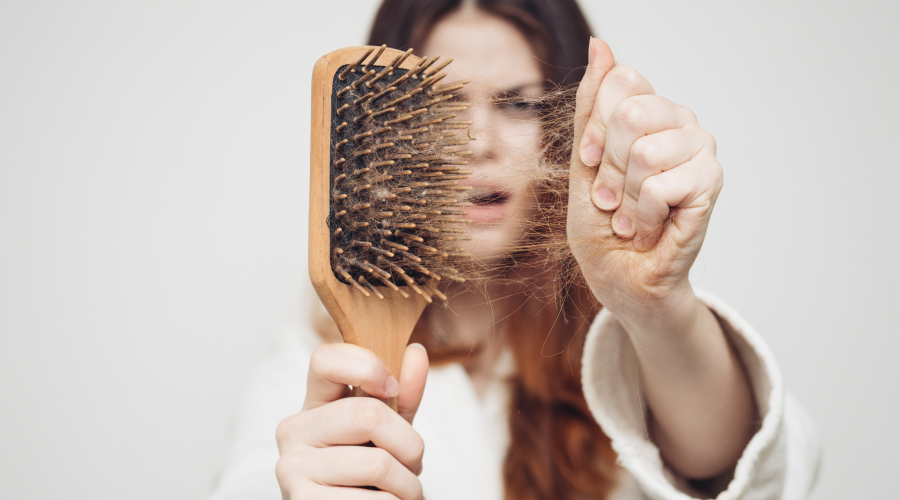

Hair thinning, frequent shedding, and a dry scalp can be frustrating, especially when topical products do not seem enough. Nutrition also plays an important role in maintaining healthy hair. Omega-3 fatty acids have gained attention for their possible role in supporting follicles and scalp health. Here, we explain omega-3s for hair, their benefits, best sources, dosage, and what the research actually shows.
How Does Omega-3 Help Hair?
Omega-3 fatty acids may support hair health by nourishing follicle cells. It also helps maintain a healthier scalp environment. EPA and DHA can influence inflammatory signalling, cell membranes, and vascular health. Omega-3s may also help retain moisture in the skin and reduce dryness. Early research suggests DHA can stimulate cells involved in hair growth. Regular intake may therefore support reduced shedding along with stronger-looking strands and healthier hair. However, omega-3 is not a standalone treatment for hair loss.
10 Benefits of Omega-3 for Hair
The connection between omega-3 and hair is still being studied. Some benefits have direct hair research behind them. Others come from what we know about omega-3’s effects on skin, cells, and circulation.
This distinction matters. Omega-3 can be a useful part of your hair nutrition routine, but it should not be treated as a miracle cure.
1. Nourishes Hair Follicles from Within
Healthy hair begins beneath the scalp. At the base of each follicle are dermal papilla cells. These cells help regulate hair formation and the normal growth cycle. Since they are living cells, they depend on adequate nutrients and a healthy surrounding environment.
DHA, a major omega-3 fatty acid, has been studied for its effects on these cells. In laboratory research, DHA increased dermal papilla cell proliferation. Fermented fish oil also activated pathways associated with hair growth and the anagen phase.
This does not mean taking fish oil will automatically grow new hair. The study included laboratory and animal models, rather than a clinical trial in people. Still, it provides a possible mechanism behind the growing interest in EPA and DHA for hair.
2. May Reduce Hair Fall and Excessive Shedding
This is one of the most promising areas of omega-3 hair research. A randomised comparative trial followed 120 women for six months while studying hair loss. One group received a supplement containing omega-3 and omega-6 fatty acids, and antioxidants.
At six months, the supplemented group showed significant improvements in hair-density measurements. The percentage of hairs in the telogen (resting) stage also fell significantly. Among participants taking the supplement, 89.9% reported reduced hair loss and 87.3% reported better hair density.
However, omega-3 was not tested alone. The formula also contained omega-6 and antioxidants. So, when asking whether omega-3 reduces hair loss, the most accurate answer is that it may help. More omega-3-only clinical trials are still needed.
3. Supports Scalp Moisture
A healthy scalp needs a strong skin barrier. When that barrier cannot hold enough moisture, the scalp may become dry, tight, or flaky. Omega-3 fatty acids may help support this barrier from within.
A double-blind study examined flaxseed oil, which is naturally rich in the omega-3 fatty acid ALA. The researchers followed two small groups of women during a 12-week intervention. Those receiving flaxseed oil showed increased skin hydration and smoothness. They also experienced reduced roughness, scaling, and transepidermal water loss.
The study evaluated skin rather than scalp skin specifically. Therefore, omega-3 cannot be called a proven dry-scalp treatment. Still, its role in skin-barrier health may help create a better environment for comfortable, healthy-looking hair.
4. May Help Reduce Dryness and Flakiness
Omega-3 is often promoted for dandruff, but there is an important difference between dandruff and simple dryness. Dandruff can involve excess oil, Malassezia yeast, inflammation, and changes in the scalp barrier. It often needs targeted treatment.
Omega-3 may be more relevant when flaking is linked with dry skin. The flaxseed oil study mentioned above found reduced skin scaling. It also improved moisture retention after supplementation. This suggests that dietary fatty acids can influence how effectively skin holds moisture.
However, omega-3 should not replace an anti-dandruff shampoo or dermatologist-recommended treatment. Persistent itching, redness, or heavy flaking needs proper assessment. In that situation, nutrition can support scalp health but may not solve the underlying condition.
5. May Help Hair Look Smoother and Shinier
Hair shine depends largely on the surface of each strand. A smooth cuticle reflects light more evenly, while rough or damaged hair often looks dull. Your haircare routine has the biggest direct effect here.
Omega-3 may provide indirect nutritional support. These fatty acids form part of cell membranes and influence skin lipid function. The NIH notes that omega-3 fatty acids play important structural roles in cell membranes throughout the body.
Research on flaxseed oil has also found improvements in skin hydration and smoothness. A healthier scalp and balanced dietary fat intake may therefore support softer, healthier-looking hair over time.
However, there is no strong human study proving fish oil directly increases hair shine. Conditioner, reduced heat exposure, and gentle styling remain more important for an immediate glossy finish.
6. May Support Stronger Hair and Reduce Breakage
Hair fall and breakage are two different concerns. Hair fall occurs when a strand leaves its follicle. Breakage occurs when part of the hair shaft snaps.
The six-month nutritional trial found improvements beyond reduced shedding. Participants also reported better hair diameter, while measurements showed thicker anagen hairs. In fact, 86.1% of supplemented participants reported an increase in hair diameter after six months.
Again, those results came from a combined omega-3, omega-6, and antioxidant formula. They cannot be credited to omega-3 alone.
Omega-3 also cannot repair a strand that has already been damaged by bleaching or heat. For breakage, good nutrition should work alongside gentle styling and limited chemical processing.
7. Supports the Blood Supply Hair Follicles Depend On
Hair follicles are living structures. They rely on nearby blood vessels to receive oxygen and nutrients needed during active growth. The NCBI notes that small blood vessels help nourish follicles and support growth.
Omega-3 fatty acids also influence cardiovascular and vascular processes. They participate in the production of signalling molecules involved in vasoconstriction and inflammatory responses. This is one reason researchers have explored their effects on vascular function.
However, there is no strong evidence that fish oil specifically increases blood flow to the human scalp. Claims that omega-3 “boosts scalp circulation” should therefore be treated carefully.
A better way to put it is that omega-3 supports normal vascular health. That may indirectly support the environment that healthy follicles need.
8. May Support the Anagen or Active Growth Phase
Every hair on your scalp follows a natural cycle. This includes the anagen (growth), catagen (transition), and telogen (resting) phases. During anagen, the follicle actively produces a new hair fibre.
Research into DHA and fish oil has produced interesting findings here. A study on fermented fish oil found activation of pathways associated with anagen stimulation. DHA also increased proliferation of dermal papilla cells involved in the growth process.
Human hair cycles are slow. The anagen phase itself can continue for several years. Therefore, changes in nutrition cannot produce overnight results.
Current research suggests that omega-3s may support growth-related follicular activity. However, we still need clinical trials showing it can actually prolong anagen in humans.
9. May Help the Scalp Handle Environmental Stress
Your scalp is skin, so it faces many of the same environmental stresses as your face. Sun exposure, pollution, dryness, and oxidative stress can all affect exposed areas of the scalp.
Omega-3 fatty acids help form cell membranes and influence inflammatory signalling. EPA and DHA can also change the balance of eicosanoids involved in inflammation. The NIH notes that higher EPA and DHA levels can shift this balance towards less inflammatory activity.
This does not mean omega-3 can shield your hair or scalp from UV rays. It cannot replace sunscreen or physical sun protection.
If your hair is thin, the scalp may be more exposed to sunlight. A hat or suitable scalp sunscreen remains the more direct form of protection.
10. May Support Better Hair Density and Thickness
Hair density describes the number of hairs growing in a particular area. Hair thickness refers to the diameter of individual strands. Both affect how full your hair looks.
The strongest human research in this area again comes from the six-month nutritional study. Researchers found improved hair-density measurements and a greater proportion of thicker anagen hairs. Participants also reported improvements in both density and hair diameter.
Laboratory DHA research indirectly supports this finding. DHA stimulated dermal papilla cells and growth-related pathways involved in follicle activity.
Together, these findings make omega-3 for hair growth an interesting area of nutritional research. However, omega-3 cannot reverse every type of thinning. Genetic hair loss, thyroid disorders, iron deficiency, and autoimmune conditions need separate medical evaluation.
Best Dietary Sources of Omega-3
Getting omega-3 from food is usually the simplest place to begin. Omega-3 fatty acids come mainly as ALA, EPA, and DHA. Fish provide EPA and DHA directly, while many plant foods provide ALA.
Marine Sources High in EPA and DHA
Fatty fish are among the richest dietary sources of long-chain omega-3. Good options include salmon, sardines, mackerel, herring, and trout. A serving of around 85 grams (3 ounces) can provide meaningful amounts.
For example, 85 grams of cooked farmed Atlantic salmon provides about 1.24 g DHA and 0.59 g EPA. The same serving of sardines provides about 0.74 g DHA and 0.45 g EPA. Atlantic mackerel provides approximately 0.59 g DHA and 0.43 g EPA per 85 grams.
These foods also provide protein, which is important because hair itself is largely made from keratin.
Plant Sources High in ALA
Vegetarians can get omega-3s from various food sources. These include chia seeds, flaxseeds, walnuts, soybeans, and certain vegetable oils. These mainly provide ALA rather than EPA or DHA.
Chia seeds are particularly rich. A 28-gram serving contains about 5.06 g of ALA. The same amount of English walnuts provides around 2.57 g of ALA. One tablespoon of whole flaxseed contains about 2.35 g of ALA.
The body can convert ALA into EPA and DHA, but this process is limited. The NIH reports conversion rates of less than 15%. Therefore, direct sources of EPA and DHA can be useful when these fatty acids are specifically needed.
Supplements: Fish Oil and Algal Oil
Fish oil is a convenient source of EPA and DHA when dietary intake is low. Algal oil offers a fish-free alternative and usually contains DHA, with some products also supplying EPA.
One common mistake is focusing only on the words “1,000 mg fish oil.” That number does not tell you how much EPA and DHA the capsule contains. The NIH notes that a typical 1,000 mg fish oil supplement may contain around 180 mg of EPA and 120 mg of DHA.
For example, the current HK Vitals Fish Oil formulation lists 1,000 mg of fish oil, with 180 mg of EPA and 120 mg of DHA per capsule. Always check the EPA and DHA values separately before comparing supplements.
For more detail, read HealthKart’s guide to understanding fish oil and omega-3 supplements.
Dietary Omega-3 vs Supplements: Quick Comparison
Food and supplements can both contribute omega-3, but they serve slightly different needs. Whole foods provide other nutrients alongside healthy fats, while supplements offer a measured amount. The table below makes the difference easier to understand.
| Source Type | Key Foods/Items | Primary Omega Type | Best For |
|---|---|---|---|
| Marine foods | Salmon, sardines, mackerel, herring, trout | EPA + DHA | Direct dietary EPA and DHA |
| Plant foods | Flaxseeds, chia seeds, walnuts, soybeans | ALA | Vegetarian diets and everyday nutrition |
| Fish-oil supplements | Fish-oil capsules or liquids | EPA + DHA | Convenient measured intake |
| Algal-oil supplements | Microalgae-derived oil | DHA, sometimes EPA | Vegetarian or fish-free supplementation |
No supplement can replace a balanced diet. You may also check our guide on the benefits of fish oil for our skin.
Dosage and How Long Omega-3 Takes to Show Results
How Much Omega-3 Should You Take Daily?
Actually, there is currently no established omega-3 dosage specifically for hair growth. This is important because online recommendations often present a single dose as proven for hair.
However, FAO/WHO guidance recommends around 250 mg of EPA plus DHA per day for healthy adults for cardiovascular health. This is a general-health recommendation, not a hair-loss treatment dose.
You may also see “1,000 mg daily” mentioned for fish oil. However, 1,000 mg fish oil does not necessarily mean 1,000 mg EPA and DHA. The actual amounts vary widely between products.
If you are considering omega-3 specifically for hair fall, speak with a doctor or dietitian. This is especially important if you use blood-thinning medicines or have an existing medical condition.
To Conclude – How Long Does Omega-3 Take to Work for Hair?
You must understand that changing your hair quality will take time. This is because your scalp hair grows slowly. As per reports from the NCBI, scalp hair grows at around 0.35 mm per day, or roughly 1 cm per month.
The human nutritional study also showed improvements in shedding and density lasted six months. This makes a three- to six-month period more realistic for assessing nutritional changes than a few weeks.
However, three to six months is not a guaranteed timeline for omega-3 results. The cause of hair loss makes a major difference. If you are experiencing major hair fall issues, you should also consult a dermatologist at the earliest. They will help you better understand the root cause of it. Moreover, hormones, genetics, iron deficiency, thyroid issues, stress, and illness can all affect how your hair behaves.
Check out our range of hair supplements for all-around hair protection.
